Why Rucking is the Best Thing I Do for My Body, Mind, and Soul
Discover how rucking transformed my physical and mental health and why this simple habit might be the best thing you can do for your body, mind, and soul.

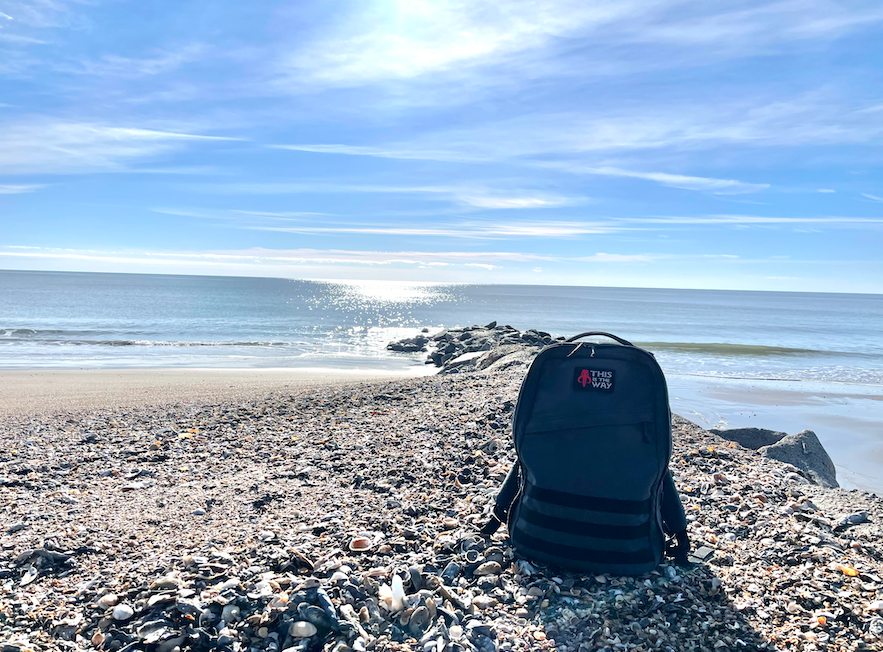
I was introduced to “rucking” on the Peter Attia podcast in 2018. He was having a conversation about his habit of putting on a really heavy backpack and going for a long walk in the hot Texas sun. The idea was oddly alluring, so I followed his direction to the website of a company called GoRuck to learn more.
My obsession was born.
I bought my first ruck about a week later - the original GoRuck GR1, which I still use to this day - and I’ve been rucking multiple days per week ever since.
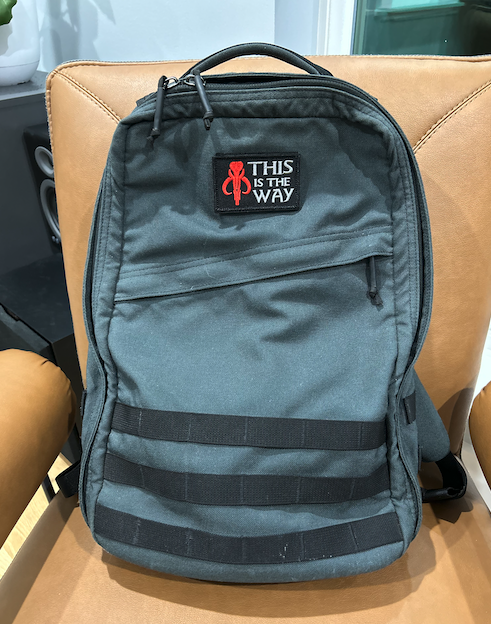
If you’ve never heard of the term “rucking” outside of a Tom Clancy novel, it can be defined as simply walking with weight on your back. That is the whole thing. You can do it in the woods, on a trail, around your neighborhood, on a sidewalk, or even on a treadmill if you have to. You can use a real rucksack with weighted plates, a backpack with books or rocks in it, or a hiking pack. For busy parents, I will even concede that giving your child a piggy back ride is an excellent way to get time under load. The barrier to entry is nearly zero.
You just walk. With weight.
It sounds simple, and it is, yet I cannot think of a single practice that has done more for my body, mind, and soul than this. It’s even improved by business and made me a better husband and parent. I’ve even convinced several friends to taking up the regular practice.
Here is why I find rucking so special.
---
First, the physical benefits.
When you walk with weight on your back, your body is doing several things at once. Your legs are doing strength work. Your core is stabilizing under load. Your cardiovascular system is being trained at a sustainable intensity - ie. You are generally walking in Zone 2 heart rate, which builds long-term physical endurance. Your skeleton is getting the bone-loading stress that maintains density. Your joints are getting low-impact movement that doesn’t destroy your knees and hips the way running can. If you’re able to ruck outside, your body is getting natural light, fresh air, and uneven terrain that requires the small stabilizing muscles to work in ways gym machines cannot replicate. Even walking with light weight on a treadmill at zero incline at slow speed delivers many of these same excellent benefits.
This is not a guess. The military has known it for a long time. Every soldier in every army in history has trained by walking with weight, because no other single exercise is as effective at building a capable and versatile human body. Peter Attia talks about it on his podcast. Michael Easter has built an entire brand around the broader principle. The studies are starting to catch up to what soldiers and hunters and farmers have always known. Loaded walking does more for human physical health than almost any other single activity. One could even argue, and many have, that God designed the human body to carry weight.
The most surprising physical benefit to me has been the improvement in my posture. Carrying a heavy load on my back for multiple miles per week requires your entire posterior chain to strengthen as your body naturally seeks to counterbalance the gravitational pull of a heavy pack pulling you backwards. This means that the muscles in your lower back, calves, hamstrings, glutes and spine all strengthen as your body naturally seeks stability while you walk. This forces your body to stand up straighter.
As with many things in life, the habits that stick long-term are the ones that become engrained in other patterns of your life. Rucking is such an easy habit to fit into your daily and weekly rhythm because it can be completed alongside so many other tasks. Taking a work call? Throw on a light pack and take your call with earbuds in while walking. Need to get groceries? Park at the end of the parking lot and wear your pack while shopping. Need to go to the mall to visit the Apple Store to pick up your new iPhone? Throw on your pack and walk the mall. Bonus points for skipping the escalator and taking the stairs while walking with weight. Meeting a friend for coffee? Grab your coffees to go, throw on a pack, and walk together. I can virtually guarantee the conversation will be better. You get the idea. Rucking doesn’t have to be boring. You can incorporate it into your daily life to the point that it becomes a habit and you don’t even think of it as exercise. Win win.
---
The benefits that rucking provide for our mind and our soul are harder to quantify, but I believe they are even more important and profound.
When I first started rucking, I treated it like every other workout. I put in earbuds. I listened to podcasts. I listened to audiobooks. I treated the walk as productive time, where I could be exercising and consuming content at the same time. I felt like I had discovered a new life hack.
It took me about a year to realize that the constant barrage of information was killing most of what was actually valuable about the practice.
The audio kept my brain in the same mode it lives in all day. Receiving input. Processing input. Responding to input. My body was outside, but my mind was still inside, still scrolling, still being talked to. Trying to connect the dots from what I was listening to and apply it to the applicable areas of my life. I would finish a ruck and feel great physically, but often even more overwhelmed. The exercise helped. The audio canceled out most of the rest.
The day I stopped wearing earbuds on my rucks, everything changed.
I won’t pretend it was easy at first. The silence felt strange. I noticed that I had not been alone with my own thoughts in a long time. The first few walks were uncomfortable. Stuff came up. Things I had been carrying without quite knowing I was carrying. Anxieties about the business. Worries about my health. Thoughts about my marriage and my daughters. Things I had been keeping at bay with constantly seeking either the next best self-help book or escaping into my favorite fantasy fiction novel.
I started to pray on those walks. Sometimes out loud. Sometimes silently. I started to notice the trees and the light. I started to greet the people I passed on the trail instead of nodding at them with my earbuds in. I would literally stop to smell the roses on the side of the road sometimes. I started to think real thoughts instead of half-thoughts, and to follow them all the way through to the end.
If there is an anxiety that I am holding inside, I will go for a ruck. It does not always make the anxiety go away, but it is always a good time to gain perspective and to think. Quite often if I’m struggling with a problem, going for a walk with weight is the place where I work it out. I don’t always solve problems while walking, but it almost always helps me plan a next step, or just work up the courage to take the next step if needed.
Ryan Holiday has a line about walking I keep coming back to. Going for a walk, he points out, will not solve all your problems—but as he puts it, "I cannot think of a single problem it will make worse." That has been my experience exactly. Whatever I am carrying when I head out the door, I am carrying it more lightly when I come back.
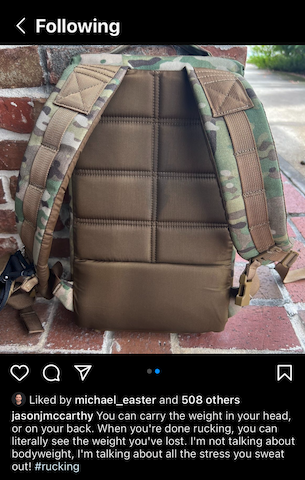
Jason McCarthy, the founder of GoRuck, talks about how when you get to the end of a ruck you finally get to set down the weight. He means this in both a literal and figurative sense - you take off your literal weighted pack, but you also get to shed the weight of whatever emotional burden you were carrying and working through on your walk.
---
There is one more piece to this that Michael Easter has helped me name.
Easter has written extensively about how modern life has stripped away nearly all the inherent difficulty our ancestors took for granted. We don’t walk long distances. We don’t carry heavy things. We don’t let ourselves get hungry. We don’t get too hot or too cold. We are never get bored. We don’t often encounter difficulty unless we go looking for it. And he argues, persuasively, that this elimination of difficulty is making us physically weak, mentally fragile, and spiritually hollow. ( Side Note - I understand that I am speaking from a profound place of privilege when I make these statements. I fully recognize that there are many people both around the world and within walking distance of my own home that face unimaginable difficulty every day whether they choose it or not. I don’t say these things to minimize their suffering, but rather to shine a light on the avoidance of difficulty that many of us succumb to in our privileged first world existence.)
His prescription is to deliberately reintroduce some of the difficulty modern life has removed. Take the stairs instead of the elevator. Choose the harder path. He cites a statistic: only 2% of people take the stairs when an elevator is available. He wants to be in that 2%, not because being uncomfortable is virtuous in itself, but because the kind of person who chooses the harder path in small things ends up capable of choosing it on the larger ones.
Rucking is one of the cleanest applications of this principle I have found. Nobody has to ruck. You can walk without the pack. You can drive instead of walking. You can lift in an air-conditioned gym instead of carrying weight up a hill. The whole practice is voluntary difficulty. It is choosing the slightly harder thing, every day, on purpose.
And here is what I have noticed. The voluntary difficulty of rucking has made the involuntary difficulties of life easier to carry. The cancer diagnosis. The hard hard problem in my business. The bad day with one of the kids. The phone call you do not want to make. All of them feel less heavy when your body has spent the morning carrying actual weight up an actual hill.
There is a Christian word for this too. We don’t always use it, but it is what Easter is describing through his evolutionary biology lens. The word is discipline. The body and the soul are both formed by what they are subjected to. If we subject ourselves to nothing, we are not formed. We have to deliberately undergo what life would never make us undergo on its own. And I believe the Bible is very clear that God often asks his people to go through suffering as a way of forging our souls. God asks us to go through fiery trials and tribulations for our own good and for his Glory. We are not promised an easy life, but voluntarily entering into the hard things makes your body, mind and soul more resilient to do the work that God has called us to.
---
There is one more thing I have come to love about rucking - It is one of the best social activities I’ve ever found.
It is hard to think of an activity better suited to time with friends. You are outside. The pace is slow enough that conversation comes easily. There are no screens. There is somewhere to go and something to do, but the something is simple enough that the conversation can wander wherever it wants.
Introverted or extroverted? Makes no difference here.
Some of the best conversations I have had in the last few years have happened on rucks with friends. Long talks about marriage and parenting and work and faith. Talks that would have been awkward in a coffee shop and would never have happened on a phone call. The walking does something. The weight does something. The fact that you both committed to be outside doing something difficult together does something else. By the time you are done, you have shared real time, real movement, and real conversation, and you have come back lighter than you went out.
It is also, frankly, a lot of fun. There are not many things I would rather do than head out on a long ruck with a friend or two. The weight makes you tired. The conversation makes the time fly. The coffee at the end just tastes better.
If you have a friend you want to spend more time with, invite them to ruck.
---
I would love to tell you that I get out for a long ruck in the woods every single day. The truth is more complicated.
The demands of work, parenting, and being a good husband do not always allow for an hour-long walk outside. Some weeks I manage five or six. Other weeks I manage two. There are seasons when getting out the door for an hour, in the daylight, before the day swallows me, is just not realistic.
Thankfully, I found a simple workaround I have come to love. I bought an inexpensive treadmill desk and set it up in my garage. On the days when I cannot get outside, I can still get a ruck in while I work. I put on the pack. I set the treadmill to a walking pace. I take meetings. I answer emails. I write. I run my business with 40 pounds on my back, doing what my body was actually designed to do.
It is not the same as walking through the woods. The mental benefit is reduced when I am simultaneously working. The prayer and the silence and the trees are not there. But the physical benefit is real. The body is still moving under load. The compounding is still happening. And on the days when I would otherwise miss it entirely, the treadmill desk has saved me.
Rucking can adapt it to whatever your real life actually looks like.
---
You don’t need an expensive specialized pack, as nice as some of them are. You can throw on any backpack or bag with some books or rocks in it and walk. You do not need a fancy treadmill. You can use any treadmill, or no treadmill at all. You do not need to commit to a specific protocol. You can carry 10 pounds for 15 minutes one day and 40 pounds for an hour the next. You can adjust the weight, the distance, the speed, and the route depending on how you are feeling.
If you live in a city, walk through the city. If you live near woods, walk in the woods. If you live in suburbs, walk in your neighborhood with a heavy bag and let the neighbors wonder what you are doing. They will get used to it. So will you.
The whole point is that there is almost no version of your life where rucking is not possible. You can start small. You can scale up. You can use what you already have. And on the days when you cannot do it the way you would like, you can do it some other way.
I won’t tell you this is the only form of exercise that provides benefits. Lifting weights is good for you. Running is good for you. Yoga, Pilates, CrossFit—there are plenty of good options.
But I am telling you that I have found nothing that combines physical, mental, emotional, and spiritual benefit the way rucking does. Nothing that integrates body, mind, and soul the way walking with weight in silence does. Nothing that makes the rest of the day easier to carry. Nothing that builds real friendship the way a long walk with weight and good conversation does.
Many years in, I am still rucking as often as I can. I expect to be doing it twenty years from now. It costs me nothing. It gives me everything I need to walk into the rest of the day capable of doing what God has put in front of me.
If you are looking for one thing to add to your life, this might be it.
You do not need permission. You just need a pack, some weight, and 15 minutes of free time.
Lace up. Load up. Walk.